How to Use Wordpress With Git With Image Uploads
GitHub is one of the well-nigh popular tools among developers. If you haven't done then yet, as a WordPress developer, it's time you added information technology to your workflow. As you'll see, whether yous're developing WordPress websites, themes, or plugins, a WordPress GitHub mix will make your life easier.
In this guide, we'll explore two different ways you can use WordPress with GitHub. We'll look at the available WordPress GitHub tools and how to work with a local and a cloud environs.
Then, we'll take a quick look at how you can install WordPress plugins and themes that you find on GitHub. Lastly, nosotros'll also take a quick await at some of the WordPress GitHub plugins. And so, without farther ado, let's go to it!
Table of Contents:
ane. What Is GitHub?
2. Why Use WordPress with GitHub
3. Preparing GitHub for Your WordPress Piece of work
4. Download and Install GitHub Client onto Your Computer
5. Installing WordPress on Your Local Automobile
half-dozen. Wordpress Github: An Of import Note About Version Control
seven. Wordpress Github: Committing Your WordPress Files to GitHub
eight. Downloading and Installing WordPress Plugins and Themes From GitHub (the Simplest Way)
ix. Best WordPress GitHub Plugins
VersionPress
WP Pusher
GitHub Embed
x. Time to Get Your Showtime Repo Up and Running!
What Is GitHub?
Before we talk about GitHub, nosotros need to kickoff look at Git itself. Whenever developers are working on a website or an app, they make abiding changes to the lawmaking. But, it wouldn't exist rubber nor reliable to have them work on the code in product. Nor would it make sense to have all developers edit the aforementioned code simultaneously.
That doesn't mean they shouldn't interact. Merely, whenever they're working on a project, information technology's best to branch out and work on their own re-create of the source code.
Git is a distributed version control system that they can apply to rails and manage those changes to the code. GitHub is a place to host your Git repo, collaborate and share your code with other developers.
Why Employ WordPress with GitHub
In that location are a few significant benefits to using WordPress GitHub. The first and most obvious 1 is the aforementioned version control. It allows you to experiment with your lawmaking, examination information technology, and work on improving it. All that without the fear of making an irreparable mistake. After all, a WordPress GitHub mix enables you to get back to an earlier version of a selected file with ease.
Another huge reason to introduce GitHub to your WordPress Development arsenal is collaboration. By using Wordpress GitHub, you can allow others to join the evolution procedure and commit their code. And, as a consequence, speed up the development process. This is particularly useful when working on a new plugin or theme.
Speaking of the latter, a WordPress GitHub combination is an excellent tool to go on a child theme in version control. What'south important, it won't exist just your edits that y'all'll be able to control. Such a mix protects you lot from sudden theme changes should it get an upgrade from the developer. Not to mention all the collaboration possibilities.
Preparing GitHub for Your WordPress Work
First, you need to create two GitHub repositories. We desire one over on GitHub and one on your local machine. It'll be the same repo – and then technically, y'all just need to create ane and and then clone it. Since it'due south a consummate WordPress GitHub guide, permit'due south start with signing upward on GitHub. First, enter your email address:

Then, GitHub volition ask you to provide your password and choose a username. A quick note here. The username that you choose volition be public. Information technology'll also be part of the links to your repos, where yous store all your WordPress GitHub project files.
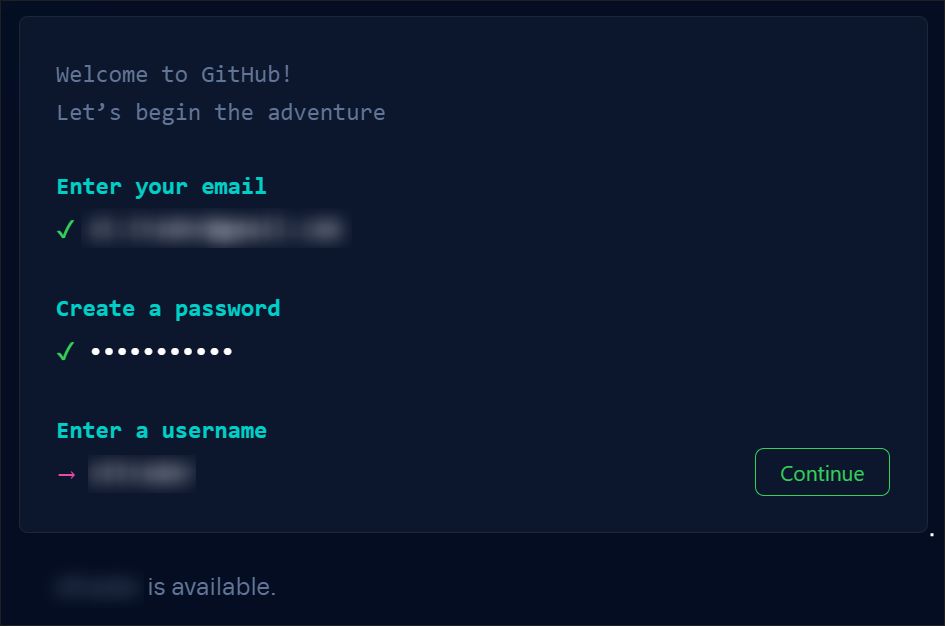
One time you lot hitting continue, y'all'll be asked to solve a captcha and pick whether yous want to receive product updates. Then, just verify your electronic mail and y'all're all set.
Adjacent, let's create your offset repository:
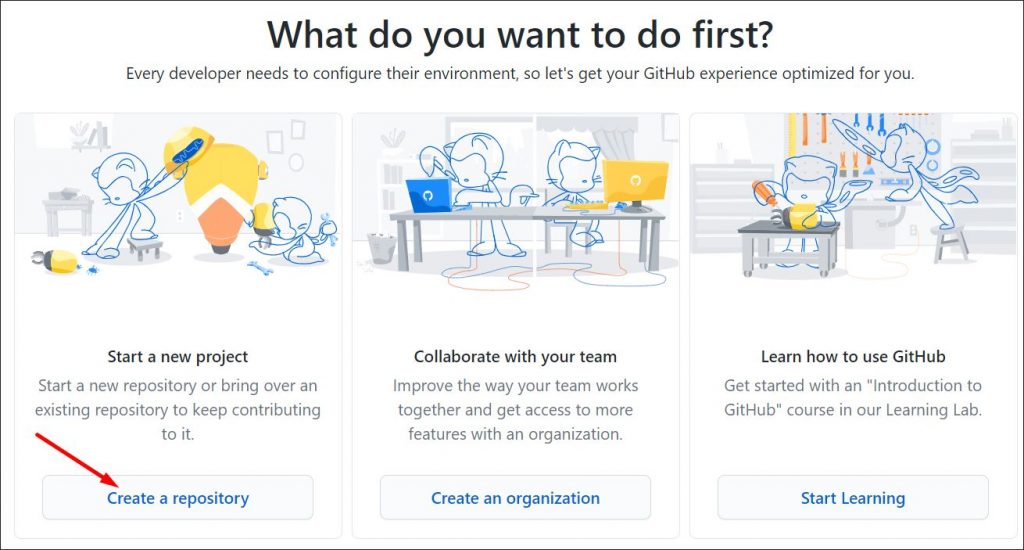
So, enter a new proper noun for the repository and click Create repository. Go along in mind that, just like your username, the repository proper name volition be public.
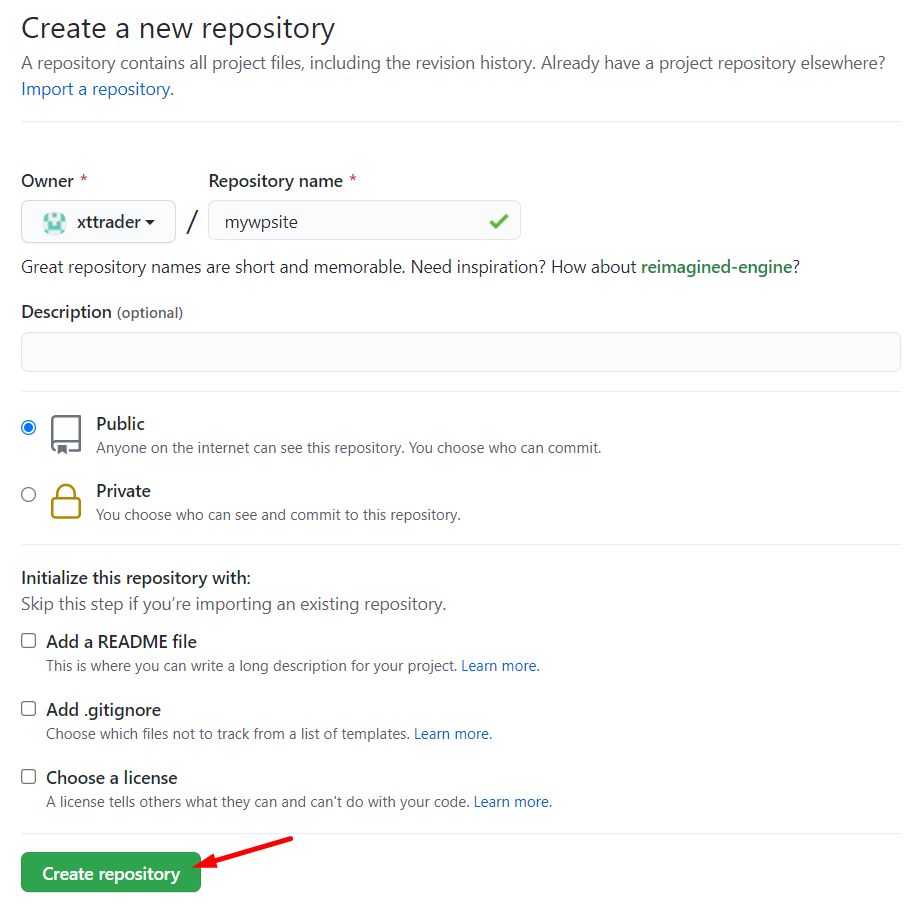
Download and Install GitHub Customer onto Your Computer
There are two means you can install and configure GitHub in a local surround. Yous tin can either do everything using a command-line tool or a GitHub desktop client. In this guide, we'll download the GitHub Desktop client. To exercise that, head over to this page.
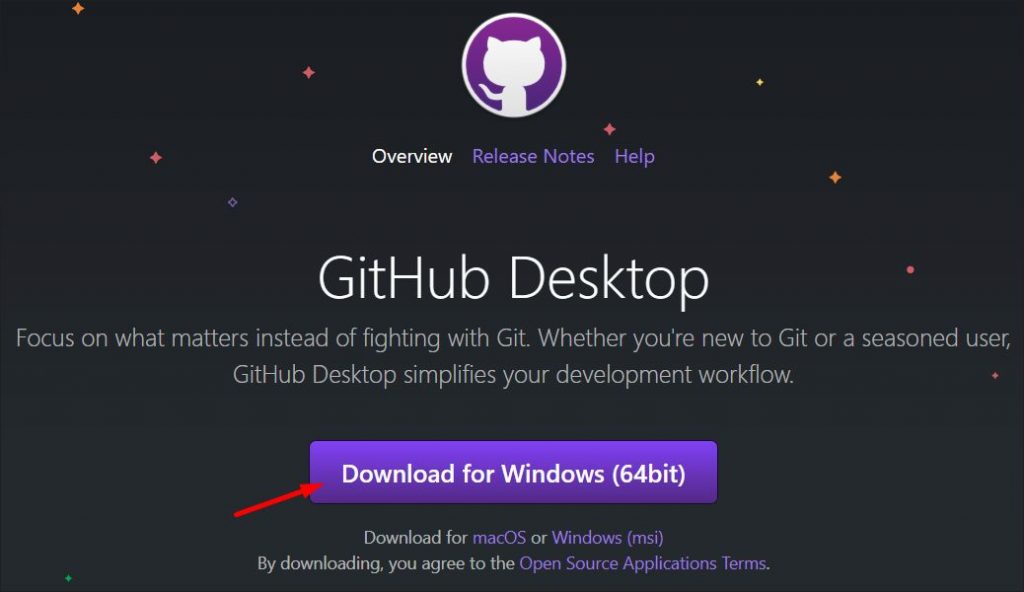
Annotation that we'll be using a Windows version – but both macOS and Linux versions are available. Once you download the file, start the app. You lot'll be asked to sign in to the account you lot created in the previous step and authorize GitHub desktop:
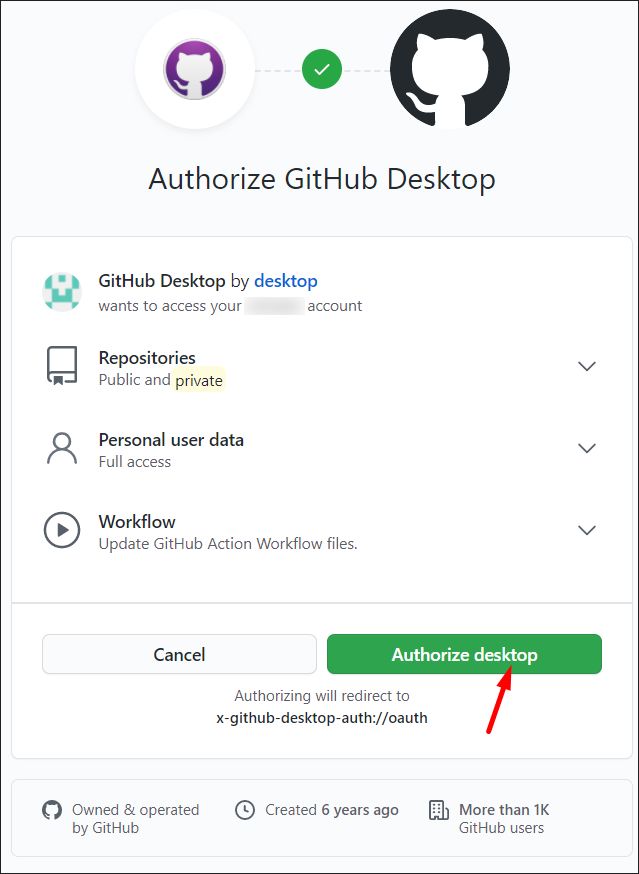
Adjacent, you lot want to clone a repository from the Internet over to your hard drive. A quick reminder: if you haven't created a clean repo on GitHub even so, yous tin create 1 locally and publish it online.
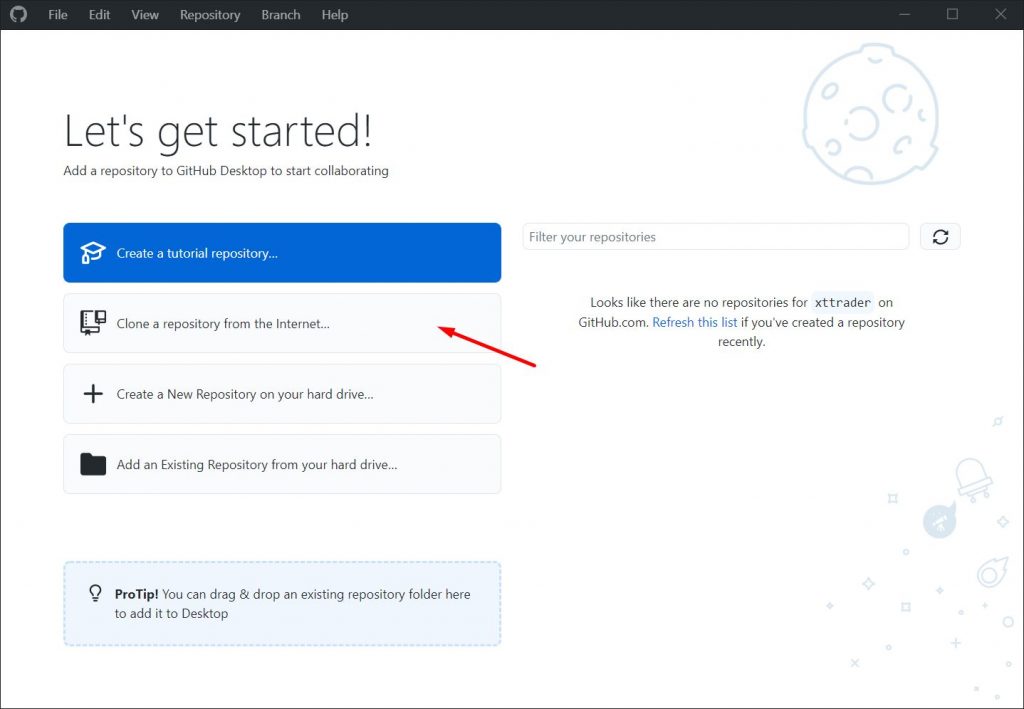
In our example, however, we're cloning a repository that'southward already published on GitHub's server. To exercise that, striking Clone a repository from the Net. In the next window, cull GitHub.com and select the repository that you wish to clone.
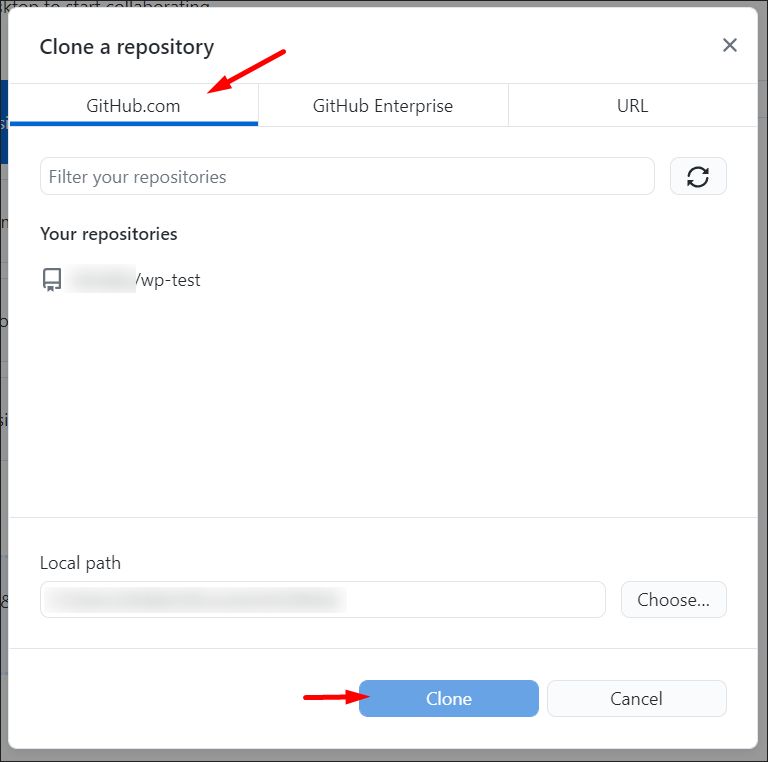
Wordpress GitHub: Installing WordPress on Your Local Automobile
Of class, you lot also need to install WordPress on your local computer. To do that, yous want to create a local server. There are a couple tools you tin utilise to practice that such as MAMP, WampServer, or Docker. There are also WordPress-axial solutions such as Local. In this guide, nosotros're going to use the Windows' version of ampps. Head over to this folio to download the latest version.
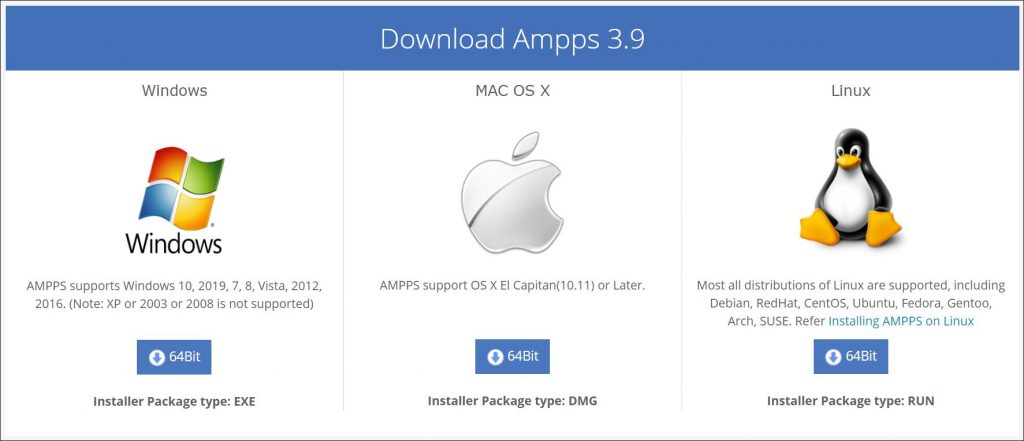
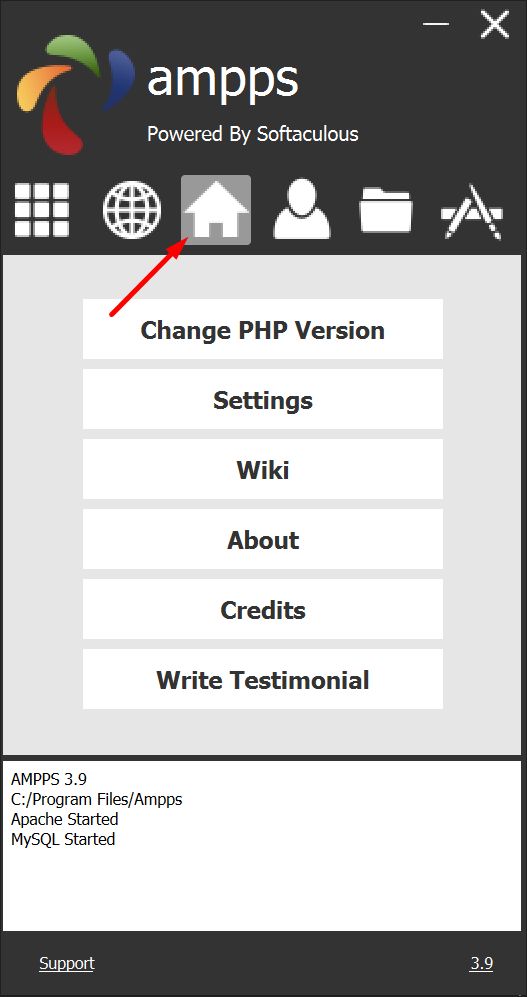
Once you download, install the software and restart your computer if needed. The installation process is very straightforward and so we'll non become into details. Side by side, open ampps – both MySQL and Apache should already be upward and running. Click Dwelling house to go to the control panel:
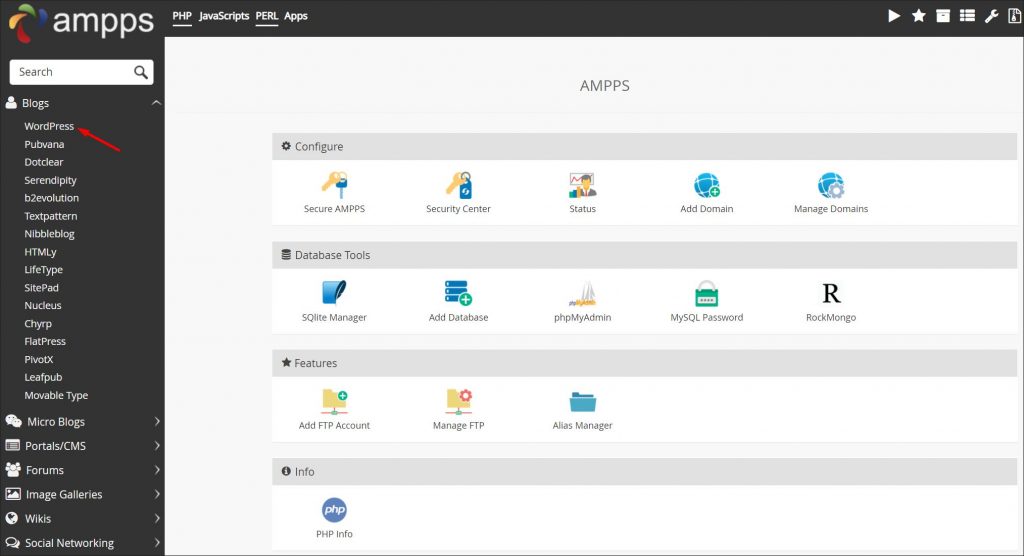
Once you enter the control console, click Blogs in the left-manus side menu and select WordPress:
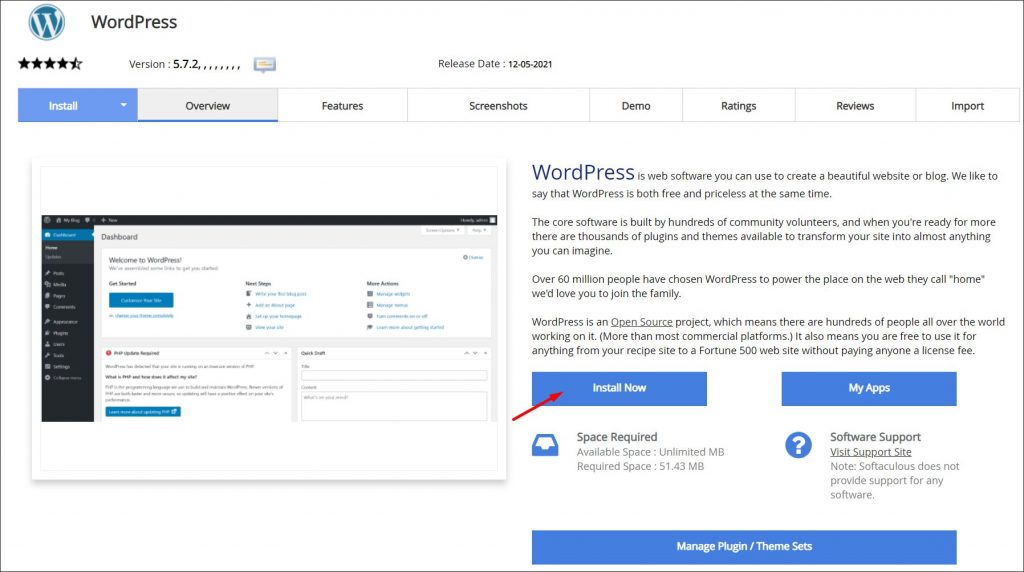
Next, click Install Now to brainstorm installation:
Because yous're installing it on a local server, you can't choose the domain. But, yous tin still cull other options such as site proper name or admin credentials. Of course, yous are free to modify these subsequently on. Once you lot set everything, ringlet to the very bottom and striking Install.
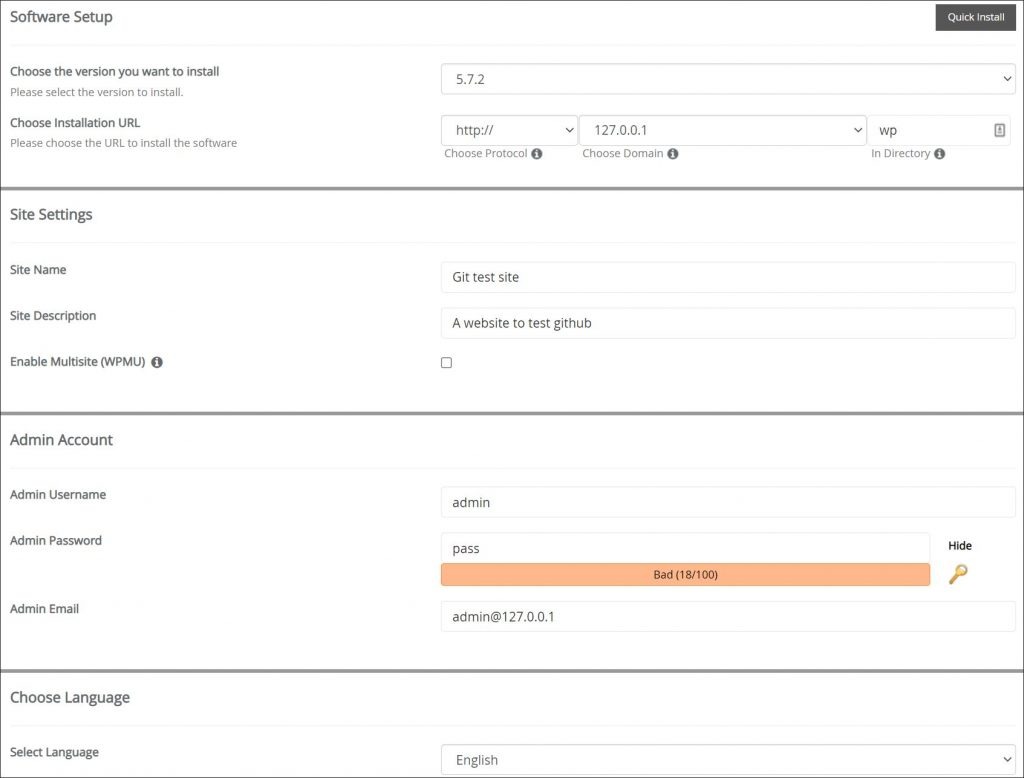
After installation finishes, yous'll get the verbal link to your admin panel. In our case, information technology'southward http://127.0.0.1/wp/wp-admin/. Unless you've changed the WordPress installation path, the files themselves volition exist in the ampps folder. The default for it is C:\Programme Files\Ampps\www\wp. Now, we can go dorsum to the GitHub Desktop app which we installed a few moments ago.
Wordpress GitHub: An Important Annotation About Version Command
GitHub is an fantabulous tool to work on your WordPress theme or plugins. However, information technology'southward not an ideal solution for working with the entire site. This is because WordPress is already under version control. As a result, in that location are sure files, like WordPress core files that y'all shouldn't put in your repository. It's besides a reason why we don't recommend installing WordPress in your GitHub'southward repo binder (even if it's possible).
What if yous still want to go on your whole WordPress GitHub project under version control? At the very to the lowest degree, you lot may want to exclude the following files:
- Wp-config.php
- Wp-content/uploads (more on that below)
- Wp-content/backup (a rather self-explanatory reason)
- Wp-content/cache/ (same every bit higher up)
- Sitemap
To do that, just include those files in the .gitignore file.
And what about the wp-content/uploads binder? One of the main reasons for that is the way WordPress handles images. Whenever someone uploads an image, WordPress immediately creates its multiple versions. Keeping the uploads folder in your repo ways anyone who clones information technology, has to download all those files with it.
Because nosotros don't recommend using y'all upload the unabridged site to GitHub repo, we don't go more in-depth into it. Even so, if you still desire to practise that, check out this groovy guide past Cloudways.
Similarly, y'all shouldn't treat GitHub equally a fill-in tool. Sure, when you retrieve nearly GitHub, it might be tempting to store your entire WP installation there. But, go on in mind that site backup is not only about core website files.
On elevation of WP core files, a full WP site backup includes the database, likewise as all media files. This makes the thought of backing it up to GitHub repo troublesome. Technically, you could ship both media and data to Git. Simply, a meliorate idea would be to utilize dedicated WordPress backup tool. For example, WP Blazer'south backup feature allows you to create a secure clone of your site with all its files and settings in just a few clicks.
Committing Your WordPress Files to GitHub
So, you've got your WordPress local installation fix for testing. You've introduced some changes to the website and theme. At present, yous want to commit those theme changes to the GitHub repository. How to do that?
The easiest mode to exercise that is to copy the files straight to your Git repository folder. If you used the default GitHub Desktop settings, information technology's at Documents\GitHub\your-github-repo. Once you update the files in the repository folder, it's time to push them.
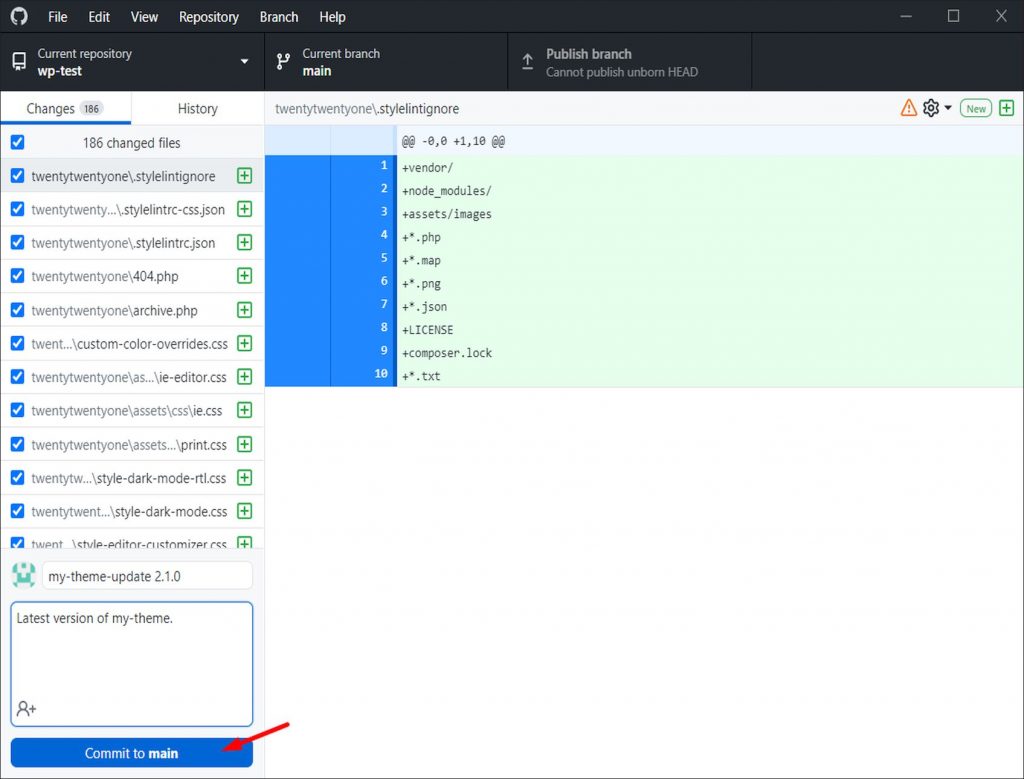
To do that, open the GitHub Desktop app and select the repository you want to commit the work to. Next, add together a summary and a brief description of the changes and click Commit to master:
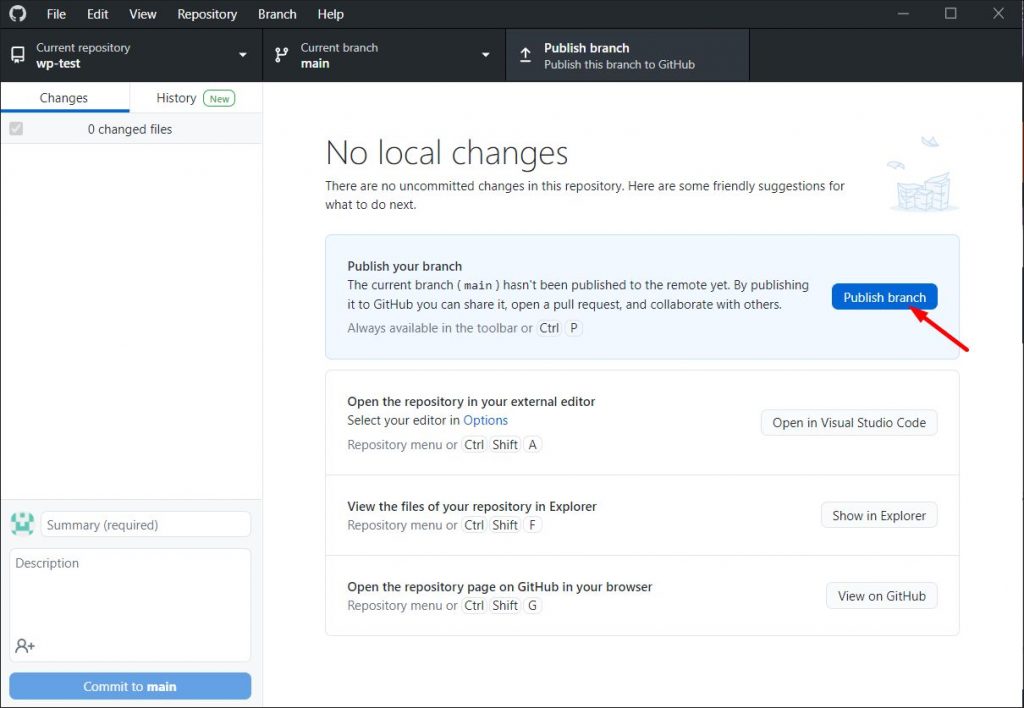
Considering we haven't published the files to the remote GitHub server yet, the adjacent step is to publish the branch:
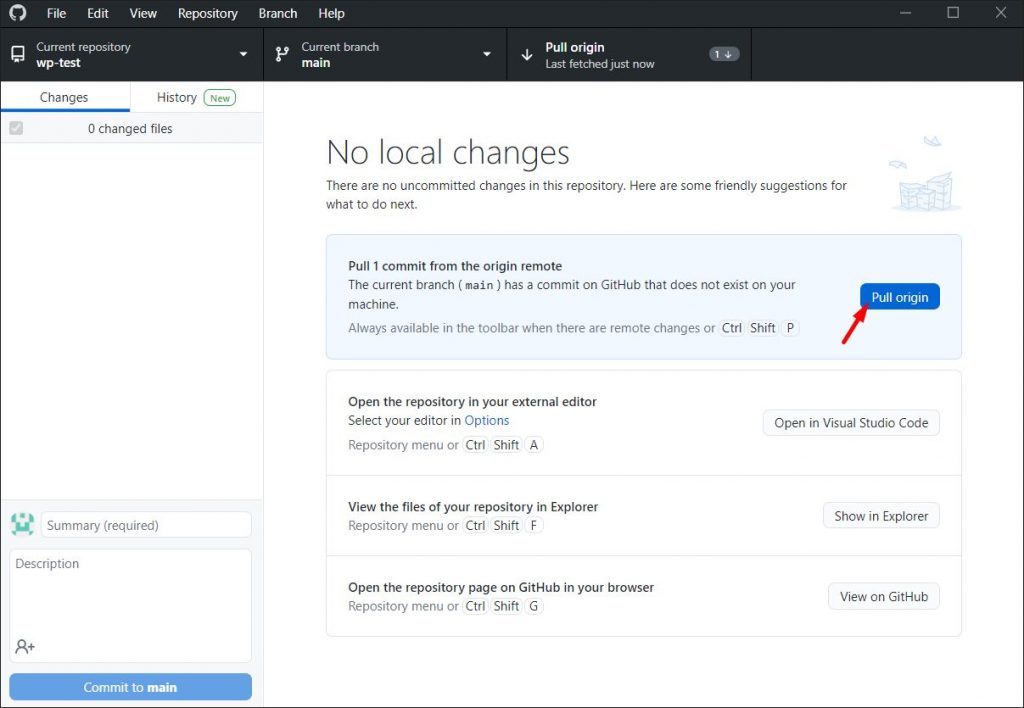
At present, what to do in case someone else has committed changes to the project and merged them on GitHub? In this example, hit Pull origin to merge the changes to your local repository:
And what if y'all want to stay isolated from the changes other people are making? All yous need to practice is create another branch in your repo.
Downloading and Installing WordPress Plugins and Themes From GitHub (the Simplest Fashion)
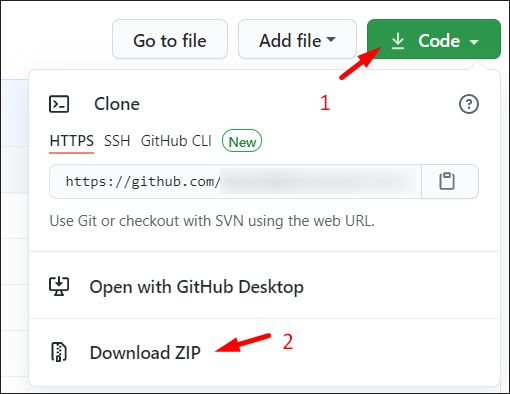
Of course, GitHub is also an excellent place to expect for plugins and themes to install on your website. Thankfully, you tin install them the same way you'd install whatever other plugin. Except, of course, those that you download direct from WordPress plugin repository. Offset, become to the selected plugin or theme GitHub repository. There, hover over the Code push and hit the Download ZIP that appears:
Side by side, follow the usual plugin installation steps. Become to your WordPress dashboard, select Plugins, click Add together New and and so click Upload Plugin. And so, cull the goose egg file and click Install Now. In one case the plugin is installed, you lot're free to activate it.
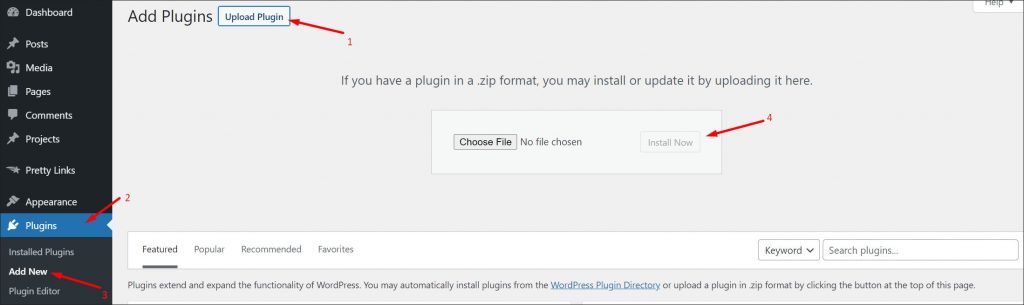
Of grade, the same procedure is true for themes. But, instead of going to the Plugins panel, you want to go to Appearance, so Themes. Once in that location, click Add together New, and just like when uploading a plugin, select the .zip of the theme.
An important affair to keep in mind is that WordPress might not show updates for some plugins and themes downloaded from GitHub out of the box. This is because it pulls the info about the latest stable version from the plugin'southward header.
If the correct code is not there, you might have to update the plugins manually. Alternatively, you lot can employ the updater plugin. We cover a few other plugins in the adjacent section.
Best WordPress GitHub Plugins
If yous're all the same a beginner, a WordPress GitHub combination may seem complicated. Thankfully, WordPress boasts a few solid plugins that can aid you automate office of your piece of work. And, every bit a result, arrive much easier and faster! Here are our summit three picks to make your life easier:
VersionPress

Take your version control with WordPress and GitHub to the next level. Unlike almost solutions VersionPress goes beyond simply version-controlling the files. With the wordpress github plugin, it'southward possible to "have control" of the WordPress database too!
About importantly, the plugin automatically creates git commits for all changes. Plus, it's easy enough to exist used past both avant-garde and seasoned developers akin.
WP Pusher
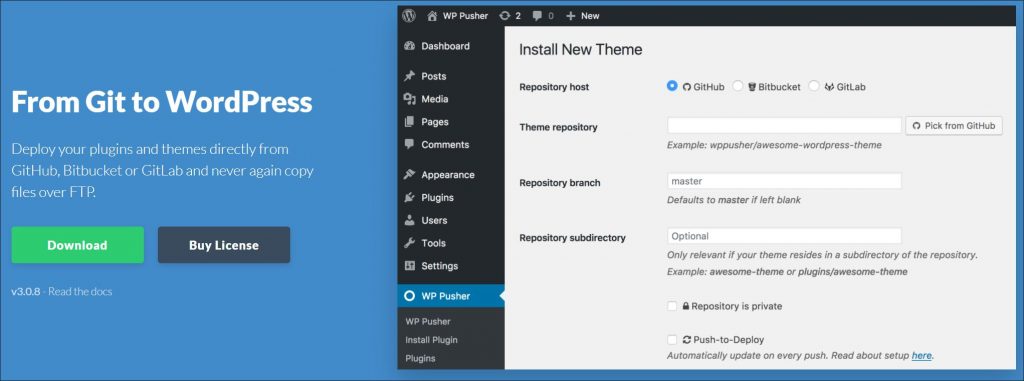
WP Pusher is a Premium WordPress GitHub plugin that allows you to deploy your plugin and theme files straight from a repository. All that is possible even without FTP admission - and the plugin works with GitHub, Bitbucket, or GitLab.
You can fifty-fifty set it to automatically update the theme or plugin any time yous push button the code to Git. The but drawback? Its free version supports only public repositories. Luckily, the virtually basic license is only $99/year and allows you to use the plugin on up to 5 client sites.
GitHub Embed
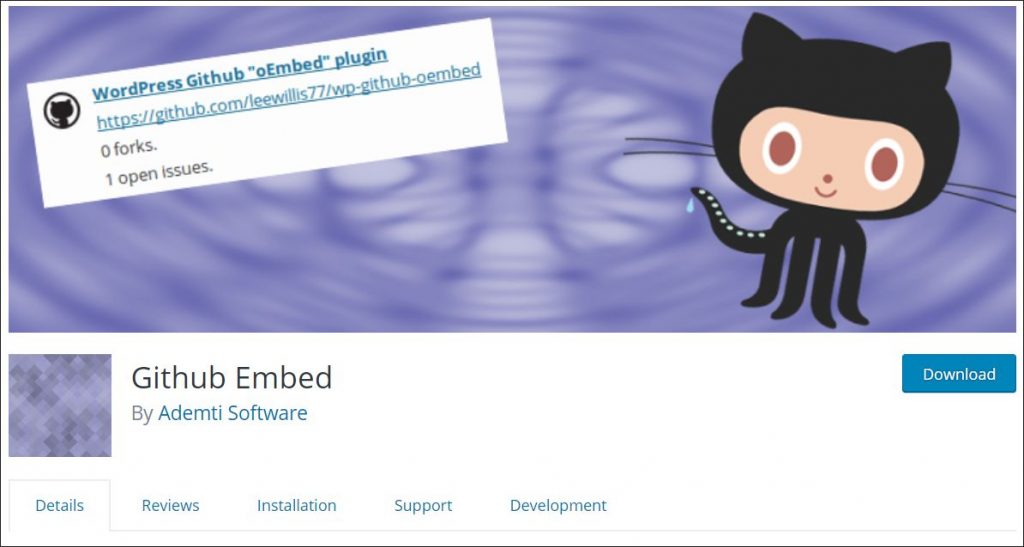
A neat little wordpress github plugin that you lot tin use to easily share your GitHub details on a selected page or postal service. Use it to embed repositories, user profiles, project milestone summaries, or contributions. All y'all need to exercise is copy-paste the URL to where you want to embed it. You lot can find the plugin on GitHub hither.
Fourth dimension to Get Your Start Repo Up and Running!
Now that y'all know how to employ a WordPress GitHub mix, information technology'south fourth dimension you started using it to your benefit! Adding GitHub to your WordPress developer'due south toolbox comes with many benefits. But, near importantly, it gives you more than control over the development process.
Experiment, share the code, and collaborate with other developers with ease! To take the first step and get the ball rolling, visit GitHub's official website and create your get-go repository.
And, of course, don't forget to create a gratis WP Blazer account and back up your website. When y'all showtime sign up, yous'll get a 14-day free trial with admission to all the plugin's features. Manage themes, plugins, and proceed an eye on the uptime of multiple sites - all that in i convenient dashboard!
childerswasur1986.blogspot.com
Source: https://wpblazer.com/tips-tricks/wordpress-github/
0 Response to "How to Use Wordpress With Git With Image Uploads"
Post a Comment